
Biophilic Interior Design: How to Bring the Outside In
Stand in a Johannesburg garden early on an October morning and you understand why so much of life here happens outside. The light comes in low and clean, the jacarandas are a few weeks off turning the streets purple, and the air still carries the cool of the night. Then you step indoors, and something drops away.
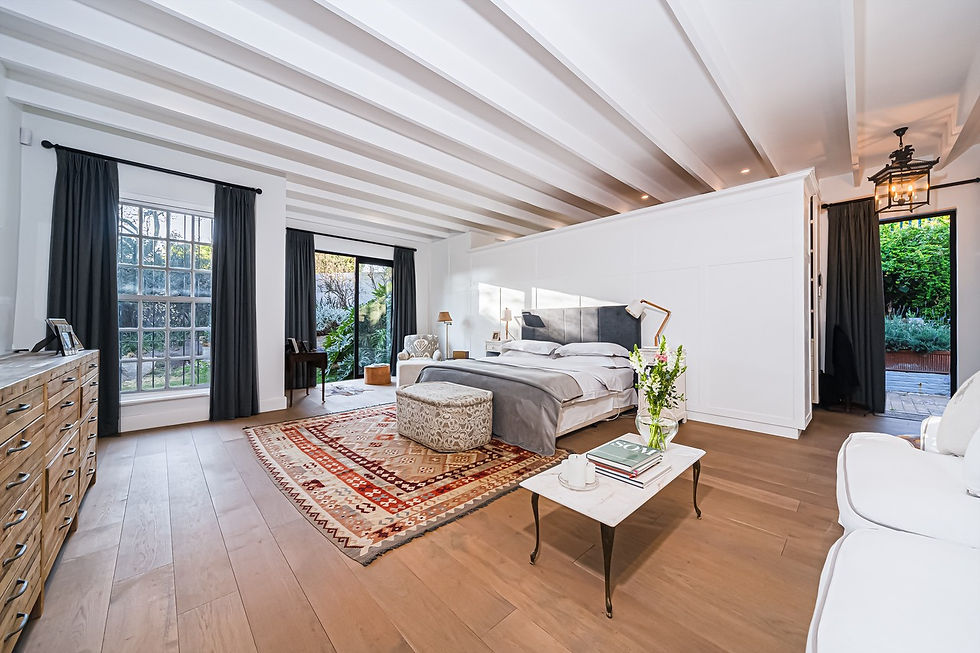
Closing that gap is the whole point of biophilic interior design. The term sounds more technical than the idea is: biophilia means an affinity for living things, and the design approach builds that affinity into a room through light, materials, planting, water and the shapes we choose. In South Africa, where the garden is often the best room in the house, it is one of the most natural ways to design.
More than a few pot plants
A fiddle-leaf fig in the corner is a lovely thing, but on its own it is merely decoration. This approach works at the level of the whole scheme: how much daylight reaches the back of the room, what the floor feels like underfoot, whether you can hear water or birds from the sofa, whether the eye is drawn out towards the garden or stopped at a wall. Get those right and the planting becomes the finishing touch rather than the entire argument.
Begin with light and air
Daylight is the cheapest luxury in a South African home and the one most often squandered. Heavy pelmets, dark frames and furniture pushed up against windows all cost you the very thing the climate hands over for free.
Filter, don't block: Save the heavier drapery for bedrooms, where you actually want the dark.
Bounce it deeper: A mirror on the wall opposite a window, pale limewashed plaster, a honed stone surface, each one carries light further into the room.
Let the air move: Openings on opposite sides of a room give you a cross-breeze on a hot afternoon. It sounds obvious, but it is routinely designed out.
Most of the gain here comes from designing around the light you already have rather than adding anything new, which makes it the first thing worth looking at in any renovation.
Let the landscape choose your materials
The quickest route to a room that feels connected to the outdoors is to build it from things that came from there. Slate, granite, sandstone, unglazed clay, oiled oak, rattan, wool, raw linen: materials with grain or grit in them. They age visibly, which is rather the point. A timber floor that shows where the family walks tells you something a laminate never will.
Layering these textures is where a scheme gains its depth: cool stone against warm timber, a rough weave against smooth plaster. Restraint helps. Three or four honest materials, used generously, will do more than a dozen used timidly.
Plants that suit the way you live
Indoor planting fails for one of two reasons: the wrong plant, or the wrong place. Choose for the light a room actually gets, not the light you wish it had.
Group plants in threes at varying heights rather than dotting them singly around a room, and give them pots worth looking at. Terracotta, glazed ceramic and aged brass read as part of the scheme. Plastic nursery pots do not.
Water, sound and stillness
Sound is the sense most often left out of a design brief. A small courtyard fountain, a wall spout falling into a shallow trough, even a still reflecting pool positioned to catch the late afternoon light; each one softens the hard edges of a house and masks traffic noise, which counts for a great deal in the northern suburbs. Where water isn't practical, a window left open and the birds in the garden will do much of the same work.
Frame the view you already have
Most South African homes have something worth looking at: a garden, a stand of trees, a slope of veld, an enormous sky. Treat that view as part of the room. Position the seating to face it. Keep the sightline from the front door through to the garden clear. Where the structure allows, full-height glazing and slim frames make the boundary between inside and out read as thinly as possible.
Thresholds matter just as much. A covered stoep with the same floor material running from inside to out turns the garden into another room rather than somewhere you visit.
The practical case
There is a longevity argument for all of this. Trends in interiors move quickly; daylight, honest materials and living things do not. A room built around them will still look right in fifteen years, and in the meantime it is simply a more pleasant place to sit on a Sunday afternoon with the doors open.


